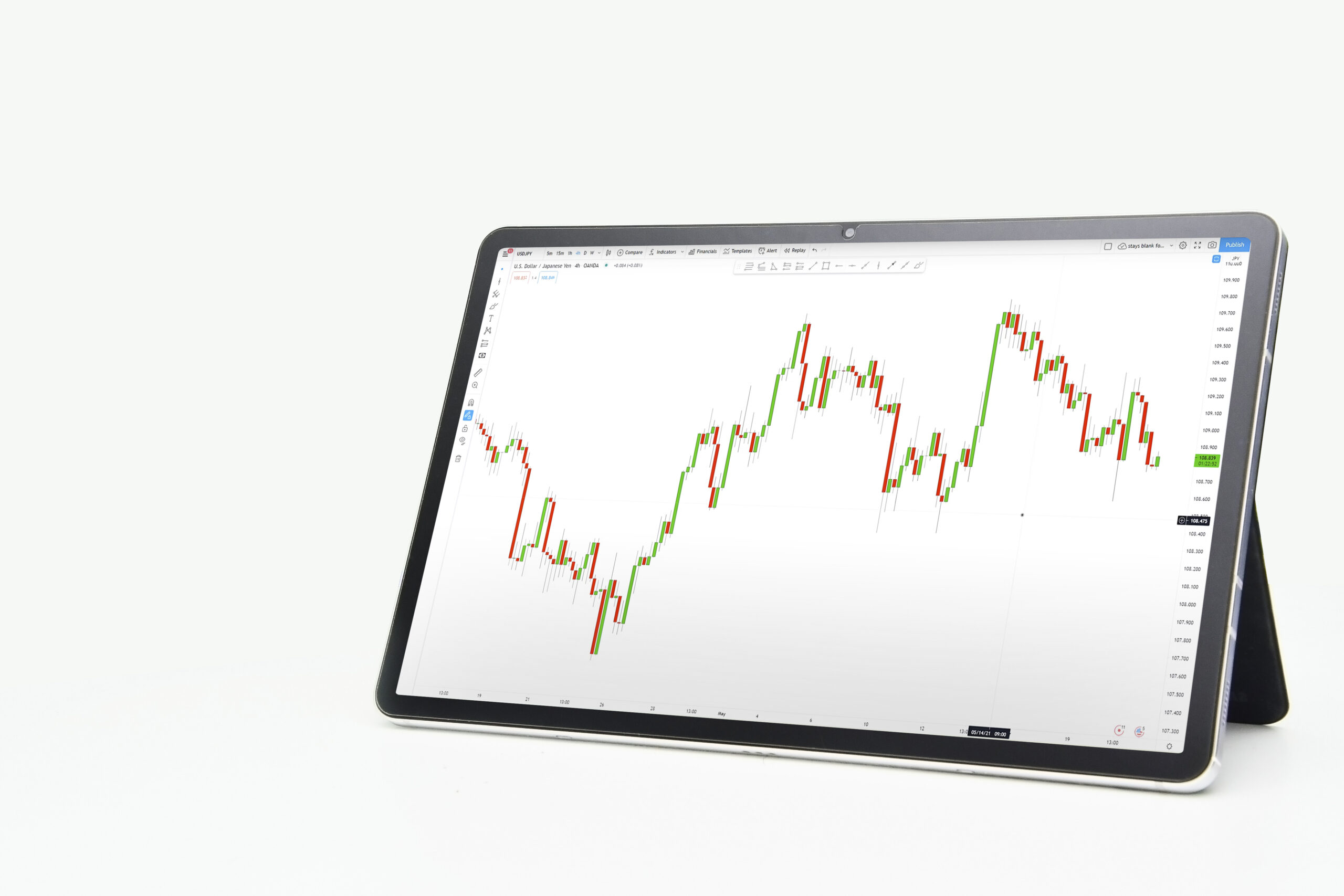

Navigating the complexities of natural gas trading requires more than just intuition; it demands a strategic approach rooted in price action analysis. Understanding how to interpret market movements on MT5 can significantly enhance your trading decisions. This guide unveils five effective price action setups tailored specifically for natural gas traders, along with essential risk management strategies to safeguard your investments. Dive deeper to discover how to harness these tools for more informed trading outcomes.
Understanding Price Action
Understanding price action entails recognizing specific candlestick patterns and market structures that indicate potential future movements.
One notable pattern is the bullish pin bar, which is characterized by a long lower wick and a small body positioned at the top. This pattern signifies a rejection of lower prices, thereby serving as a potential buy signal. For example, the appearance of a bullish pin bar near a support level may suggest an impending price reversal.
Similarly, inside bars, which manifest as a smaller candle within the range of a preceding candle, can indicate a period of consolidation prior to a breakout.
Monitoring these patterns on platforms such as TradingView can significantly enhance one’s trading strategy.
Importance in NG Trading
In natural gas trading, mastering price action is essential, as it has a direct correlation with volatility and market sentiment, significantly influencing traders’ decision-making processes.
Traders can pinpoint entry and exit points through the analysis of specific price patterns. For instance, a bullish engulfing pattern may indicate robust upward momentum, prompting traders to initiate a position, whereas a shooting star pattern could suggest a potential reversal.
Utilizing tools such as TradingView enables real-time chart analysis, allowing traders to visualize these patterns effectively. The incorporation of indicators like the Relative Strength Index (RSI) in conjunction with price action aids in confirming overbought or oversold conditions, thereby enhancing the overall decision-making process.
In 2023, traders successfully leveraged these strategies, securing profits by executing trades based on discernible price behavior signals.
Setting Up MT5 for Price Action Analysis
Establishing MetaTrader 5 (MT5) efficiently is crucial for performing comprehensive price action analysis and facilitating informed trading decisions.
Installing MT5
To install MT5, download the platform from the official MetaQuotes website and adhere to the straightforward installation prompts.
Once the setup file has been downloaded, execute it and accept the terms and conditions. The installation process typically requires approximately 10 minutes, provided that your system meets the necessary requirements, which include a minimum of Windows 7, 1GB of RAM, and a dual-core processor.
Upon completion of the installation, launch MT5 and navigate to `File’> `Open an Account’ to establish your demo account. Select the `Demo’ tab and input your details to practice trading without the risk of using real funds.
This practice period should be utilized to become acquainted with price action strategies before progressing to live trading.
Customizing Charts
Customizing charts in MT5 significantly enhances clarity and enables traders to concentrate on essential price action signals, such as support and resistance levels.
To customize your MT5 charts, one should begin by selecting the desired time frames, which can be configured from the toolbar.
- Adding indicators, such as Exponential Moving Averages (EMAs), can be accomplished by navigating to the ‘Insert’ menu, selecting ‘Indicators,’ and then choosing ‘Trend.’
- Similarly, for Fibonacci retracement, the same ‘Insert’ menu can be utilized.
Adjusting color schemes can improve visibility; this can be done by right-clicking on the chart, selecting ‘Properties,’ and modifying the colors according to individual preferences.
It is advisable to save these settings by selecting ‘Template’ under the ‘Chart’ menu, which facilitates easy access during future analyses.
Key Price Action Setups for NG Traders
Identifying key price action setups is essential for natural gas traders to capitalize on market movements in an efficient and effective manner.
Setup 1: Pin Bar Reversal
The pin bar reversal setup indicates a potential market reversal and is characterized by a small body accompanied by a long wick, signifying a rejection of a specific price level.
To identify a pin bar on a chart, one should look for a candlestick that features either a long upper or lower wick alongside a small body, positioned in relation to the prevailing trend. Optimal market conditions for recognizing pin bars include the presence of a clear trend and the proximity of significant support or resistance levels.
When executing a trade, it is advisable to enter just above the extremity of the pin bar for a bullish signal or below it for a bearish signal. Additionally, it is prudent to set a stop-loss a few pips beyond the pin bar’s wick to effectively manage risk.
This strategy aids in protecting capital while also allowing for the potential to capitalize on market reversals.
Setup 2: Inside Bar Breakout
The inside bar breakout setup occurs when the price consolidates within the range of a preceding candle, indicating potential breakout opportunities.
To identify inside bar patterns, one should look for a candle that has a lower high and a higher low compared to the previous candle. It is advisable to establish key breakout points by drawing horizontal lines above the high and below the low of the inside bar.
Effective risk management is essential; it is recommended to place stop-loss orders just outside the range of the inside bar.
For instance, during a recent bullish breakout in Ethereum, traders who implemented this strategy experienced significant gains, thereby reinforcing the effectiveness of this method when applied with proper management.
Setup 3: Trendline Bounce
The trendline bounce setup arises when the price retests a drawn trendline, presenting an opportunity for traders to enter positions that are in alignment with the prevailing trend.
To accurately draw trendlines, one should begin by identifying at least two significant price points that can be connected by a straight line. Once established, it is essential to monitor for price bounces off this line.
Successful trades frequently materialize when the price approaches the trendline but does not breach it, thereby indicating support. For instance, during a recent uptrend, a trader initiated a long position after the price bounced off an upward trendline, subsequently securing a profit as the market continued its upward trajectory.
Refining entry points entails adjusting stop-loss orders in accordance with market volatility and utilizing indicators such as the Relative Strength Index (RSI) to affirm the strength of the bounce.
Setup 4: Double Top/Bottom Patterns
Double top and bottom patterns are well-established reversal formations that indicate potential trend reversals when the price tests a specific level twice.
To confirm these patterns, it is essential to analyze the volume trends that accompany price movements. In the case of a double top, one should observe decreasing volume on the second peak, which signifies diminishing buying pressure. Conversely, for a double bottom, the volume should increase during the upward movement following the second dip, indicating robust buying interest.
Timing for entry can be determined as the price breaks below the neckline in a double top or above it in a double bottom. For practical illustrations, one may refer to the recent case study on the natural gas (NG) chart, which effectively demonstrates this pattern.
Setup 5: Breakout from Consolidation
Breakouts from consolidation zones signify strong potential for price movements, making them critical setups for natural gas traders seeking to leverage volatility.
To effectively identify consolidation zones, one should observe periods where price movement remains confined within a narrow range on the chart-typically characterized by horizontal support and resistance lines.
It is advisable to wait for a robust breakout confirmation, which is indicated by a significant price movement beyond these lines accompanied by increased trading volume.
For example, in October 2023, XYZ stock exhibited consolidation between $50 and $52 before breaking out to $55 on high volume, resulting in a successful trading opportunity.
Adopting this disciplined approach can enhance trading strategies and improve overall success rates.
Risk Management Strategies
Effective risk management strategies on MT5 are essential for safeguarding capital and ensuring long-term success in price action trading. By using tools such as stop-loss orders, position sizing, and risk-to-reward ratios available in MT5, traders can better protect their investments and optimize their trading outcomes.
Setting Stop Losses
Setting stop losses effectively is essential for traders to limit potential losses and safeguard their capital while adhering to trading discipline.
To determine the optimal placement of stop losses, two primary methods should be considered: percentage-based and volatility-based approaches.
In the percentage-based method, one sets the stop loss at a specific percentage below the entry price, such as 3% for stocks.
Conversely, the volatility-based approach employs indicators such as the Average True Range (ATR) to assess market fluctuations. For instance, if a stock’s ATR is $2, placing the stop loss two ATRs (i.e., $4) below the entry point can serve as a safeguard against typical price movements.
By combining these strategies, traders can implement a more tailored and effective risk management framework.
Position Sizing Techniques
Applying appropriate position sizing techniques enables traders to manage risk effectively by determining the amount to invest in each trade in relation to their overall capital.
Two common methods for position sizing include the Fixed Dollar Method and the Percentage Risk Method.
In the Fixed Dollar Method, a specific dollar amount is established that one is comfortable risking per trade; for example, $100. If the account balance is $5,000, this would equate to risking 2% of the total capital.
Conversely, the Percentage Risk Method involves using a percentage of the account balance. If this percentage is set at 1%, the risk on a $5,000 account would amount to $50.
Maintaining a favorable risk-reward ratio-targeting at least 2:1-ensures that potential gains exceed losses, thereby enhancing long-term trading success.
Frequently Asked Questions
What is the price action on MT5?
Price action on MT5 refers to the analysis of price movements and patterns on the MT5 trading platform. It involves using the historical data of price movements to predict future price direction and make trading decisions.
Why is price action important for NG traders?
Price action is important for NG traders because it helps them to identify profitable trading setups and make informed decisions based on the current market conditions and trends.
What are the 5 setups for NG traders on MT5?
The 5 setups for NG traders on MT5 include the trend following setup, the break and retest setup, the support and resistance setup, the pin bar setup, and the inside bar setup. These setups are based on price action analysis and can be highly effective for NG trading on MT5.
How can I use the trend following setup on MT5 for NG trading?
The trend following setup involves identifying the overall trend of a market and making trades in the direction of that trend. NG traders can use trend lines, moving averages, or other indicators to determine the trend and enter trades accordingly.
What is the break and retest setup in price action on MT5?
The break and retest setup in price action on MT5 involves waiting for a support or resistance level to be broken and then retested before entering a trade. This setup can be used to catch market reversals or continuation of trends.
Are these 5 setups suitable for all NG traders on MT5?
Yes, these 5 setups can be used by all NG traders on MT5, regardless of their trading style or experience level. However, it is important for traders to practice and test these setups on a demo account before using them in live trading to ensure they are comfortable and confident with the strategies.